Monday, June 18, 2007

Chicken and vegetables (2)

You know the challenge? There is very little stock in the fridge, it is late and suddenly you must cook a meal as fast as you can with whatever you have. An additional challenge I got: the meal is for a family whom I know quite well, but I have no idea about their eating habits.

So, what did I have? Frozen chicken and minced meat, frozen vegetables, 1 onion, 5 carrots, 4 paprikas, 1 eggplant, lots of potatoes, garlic and tomatoes and regular spices and dried goods. Not everybody likes eggplant, so that is out. Go easy on the garlic and the spices of course. I decided to go for the cookie bag. Half an hour of preparations and one hour in the oven.

4 chicken legs (separated drum sticks and thighs; skin removed)
2 table spoons soy sauce
1 tea spoon squeezed ginger
2 table spoons tomato paste (1 serving)
2 tea spoons sweet paprika
1 tea spoon turmeric
1 tea spoon ground cumin
1 onion
5 cloves garlic (squeezed)
5 potatoes
5 carrots
200 grams thin green beans (defrosted / slightly cooked)
2 green paprikas
1 large cookie bag

Defrost frozen chicken in the microwave (20 minutes). Rinse frozen green beans and allow them to stand for 20 minutes (simultaneous) in a sieve. Peel and cut carrots and potatoes (10 minutes, simultaneous to defrosting). Clean and cut onion, ginger, paprikas and garlic (10 minutes, after cutting vegetables, simultaneous to defrosting). Preheat oven at 190 degrees.
Fill cookie bag with soy sauce, spices, tomato paste. Squeeze garlic and ginger and add to the bag; mix well, by closing and shaking the bag. Add chicken, potatoes, carrots and paprika; mix well, by closing and shaking the bag. Shake the beans in order to remove as much water as possible then add to the bag and shake well.
Seal bag, make 4-8 holes with a tooth pick and place in the oven. Ready after 50-60 minutes.

Sorry no picture. The photograph is of the previous cookie bag meal I posted.

Sunday, June 17, 2007

Karaoke nights at the Twilight Lounge - Writing Show podcast

Jean Tennant (photo right) wrote a novel (Karaoke nights at the Twilight Lounge) and is now trying to get her work published. How to go about that task? Send the manuscript to publishers? Get an agent? And another thing, while waiting for answers and receiving initial critiques: Should she rewrite some of the novel upon reconsidering?

Jean Tennant arrives as a regular guest on the podcast The Writing Show to report the progress or lack thereof with getting Karaoke nights at the Twilight Lounge published. She is supported by the show's audience, with good critiques and acclaim. Show host Paula B (photo left) interviews her very emphatically and together they discuss Jean's options. Paula calls this the reality show, as opposed to other editions of the podcast where she interviews writers about their end-products.

For an aspiring, forever aspiring, writer such as myself, The Writing Show is both an inspiration as well as a cold shower. The intricacies of writing and moreover of getting published and what more, that is involved in the writing process makes me discouraged. The example of Jean as a particularly discouraging case in point. I mean sofar, I couldn't push myself to finish an entire novel and she has. But then she mostly gets ignored and if at all rejected it is after more than half a year. In the mean time she has begun rewriting the novel and is still alive and kicking. I'd have come to a grinding halt with a broken heart.

The show is lovely though. Paula Berinstein is an absolute dear and I recommend this podcast warmly, especially for writers.

Not knowing - Zencast 102

One of the podcasts in my playlist that I haven't come round listening to for some time is Zencast. I love the dharma teachings, especially by Gil Fronsdal, but I have to be in the right mood. Zencast puts out podcasts that last between 30 and 90 minutes out every week, so it is easy to build up a backlog -- as I have.

I do not listen to all of them. I am particularly fond of Gil Fronsdal, like I wrote above, unlike some of the other speakers. In view of the backlog, I also revert to selective listening, based upon the subject. Hence, the issue #102 of April 29th had a compelling title: Not knowing.

I like counter-intuitive things. Like here, I am so much into knowing, I try to learn all the time, not for nothing i spend almost all of my free time listening to educational podcasts. Not knowing, stated like that, sounds like some imperative, or at least preferred attitude, and I couldn't possibly relate to the good side of that. Well, only superficially. You can't be very much into knowing, without finding out how little you know. And what is more, how much of what you thought you knew, turns out to be prejudice. In that respect, an attitude of not knowing, could mean letting go of prejudice, and there is a lot to say for that.

Dharma teaching is not like ordinary teaching. Not even like philosophy teaching. So you have to tag along and appreciate the associations and conjectural path of the speaker. That is why speakers I do not like can be so off putting. But not Gil, he has never let me down. And what is more, part of Not Knowing, means, indeed, letting go of prejudice. Fine, sofar, it would be just as good as a philosophy session, but the dharma always implies some exercise and the exercise is to practice not knowing. To study all assumptions and approach all question with an I don't know. See where it gets you. Where? I don't know.

Saturday, June 16, 2007

Another one of Anne's makloobas


If I am not mistaken ma'aluba or maqluba is Arabic for upside down. The idea is to cook the rice, the spices and the vegetables with the pieces of meat, poultry or fish on top in one big pot and when it is ready, you serve this on a broad dish. How to pass the stew onto the dish? Well, you put the dish, facing down, on top of the pan and turn the whole thing upside down. Thus the dish will be put on the table with the meat buried under a pile of rice and vegetables.

I don't mess around with this way of serving, but I do like to cook all of these types of ingredients in one pan, for it gives a very tasty stew. I like to vary with all types of ingredients. A large variety of vegetables and spices are at my disposal and I choose regarding the season. In stead of rice, or together with rice one can add lentils or other legumes, one can take couscous, qinoa and so on. Mostly I cook with chicken, but all sorts of meat, poultry and fish are fit for the stew. Here is how I made my maklooba today:

5 drum sticks with the skin removed
1 table spoon of olive oil
3 tea spoons turmeric
1 tea spoon ground cumin
1 tea spoon ground coriander
half a tea spoon cinnamon
8 stems of blanched celery
half a teaspoon squeezed ginger
5 cloves of garlic
two hands of fresh parsley
1 cup of rice
1 table spoon qinoa
half a cup of red lentils
2 courgettes
salt

Put in the oil, the cumin and one teaspoon of turmeric on low heat. Stir fry until the oil gets the color of the spices and then add the celery. Stir. Add Chicken with 1 tea spoon turmeric and ginger. Stir. Add rice and garlic and salt. Stir. Add, courgette, qinoa and lentils. Stir. Add three cups of hot water, turmeric, coriander and cinnamon and parsley. Cook until the rice is ready. Add a bit of hot water if the stew turns too dry and begins to stick to the bottom of the pan.

Itamar ate the stew in a pita.

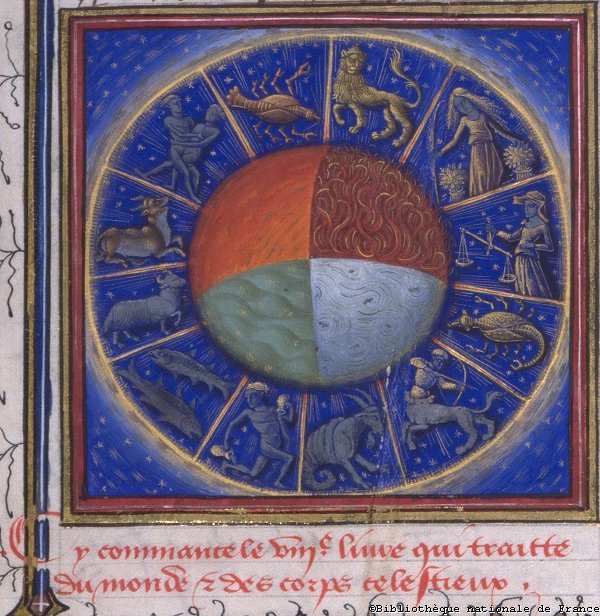
Astrology - In Our Time

This week's In Our Time started with an elegant quote from Shakespeare:
In Act I Scene II of King Lear, the ne’er do well Edmund steps forward and rails at the weakness and cynicism of his fellow men:
This is the excellent foppery of the world, that, when we are sick in fortune, - often the surfeit of our own behaviour, - we make guilty of our disasters the sun, the moon, and the stars: as if we were villains by necessity.


The effort was supposed to be to map the rise and fall of astrology. Its rise during the renaissance, with the works of Ptolemy and Abu Ma’shar and its fall -- when? This is where the shows turns really funny. Melvyn Bragg is intent on letting astrology fall. Surely it was after Copernicus? No! With Newton? No! Guest Lauren Kassell seemed to be defending astrology as a system until today. But surely astrology is no longer a subject at the university? Still it is being studied and reworked.

Were there secret believers among the guests? What a pity, once more, this podcast cannot go on for twice the time span.

Friday, June 15, 2007

From nukes , to plague, to hiv and to Spanish flu

The latest edition of Dan Carlin's Hardcore History podcast is titled 'bubonic nukes' and it discusses the effects the black death had on Europe in the late Middle Ages.

I want to be fair to Dan. After my last review, in which I complained he is too winding in introducing his point, he wrote me two emails. I'll give you a quote from each one:

My job [...] is to try to interest as many people as I can in the subject matter, and oftentimes that mean we must deal with elements that are too basic for an "advanced user" like yourself.

There are other good programs that deal with the narrative history. I want to bring back the oral history idea that our species used in earlier times to convey the events of the past as long as we have inhabited this planet. That is, of course, storytelling. There are, as you no doubt well understand, rules to storytelling...and building up to the drama and climax are standard tools in the storytellers arsenal.

I would like to add something to this. I think we must take the podcast not as a pure history podcast. The monologue borrows of history a lot, but the central and contemporary point is a thought Dan wants to pass, not a historic one, let alone a set of historic facts. So, if the latest edition is about the plague, it is not intent to inform you about the plague as it hit the world starting the fourteenth century, but rather to contemplate on the effect this had on society and compare this to what we once viewed as the pinnacle of disaster: nuclear aftermath. Eventually, nuclear disaster seems less disastrous and Dan points out that the possibility of pandemics such as the black death are still possible.