Sunday, June 3, 2007

Jef Vermassen bij Simek 's Nachts

Bij een interviewprogramma kan er maar weinig fout gaan als de gast goed is. Martin Simek had op 27 mei de Belgische strafpleiter Jef Vermassen op bezoek en daarmee kon de uitzending al op voorhand niet stuk.

Jef deed alles goed wat een gast goed kan doen. Hij sprak duidelijk en to the point. Hij was in staat om juridische kwesties voor leken tot de essentie terug te brengen. Hij was eerlijk, openhartig en doordat er uiteindelijk over zijn stokpaardje: een project voor kindsoldaten werd gesproken, werden zijn woorden extra krachtig.

Daar waar Simek in het begin probeerde het juridisch werk te banaliseren door middel van een sportmetafoor, liet Meester Vermassen zich niet meevoeren en bleef kalm, zorgvuldig zijn woorden kiezend, onderhoudend en op niveau.

Veel beter was de vraag van Simek, waarom Jef Vermassen niet de politiek in gaat. Misschien voor de Vlaamse en sommige Nederlandse luisteraars een vraag waarop ze het antwoord al wisten, maar voor mij in ieder geval niet. Vermassen blijkt een bliksemcarriere voor het oprapen te hebben, maar verkiest om neutraal te blijven. Zijn toewijding aan Afrika in het algemeen en de zaak van de kindsoldaten in het bijzonder, krijgt daardoor nog meer dimensie. Een heel inspirerende uitzending rond een heel inspirerende man.

Saturday, June 2, 2007

William of Ockham -- In Our Time


The last edition of In Our Time the great history of thought podcast by BBC's Melvyn Bragg was about William of Ockham. What a delightful subject he should be, but it proved to be a little bit too much of a delight.

Last week's In Our Time did not appear to be able to decide where to concentrate. On the history of the person, his logical thinking (the razor!) or his meaning in religious thinking (at the time or today). Melvyn found himself too many times cutting the speakers in brevity and rushing forth to the next issue. As usual the guests were excellent and each of their exposes were very worthwhile, but being rushed and cut short, the whole became shattered and I feel William has sort of slipped through my fingers. Maybe a tad too much slashing left and right, in stead of a focussed razoring?

Friday, June 1, 2007

British History 101 - podcast

British History 101 is a podcast by Michael Anthony. It gives highlights from British history in podcasts lasting 10 to 25 minutes. The casts are adorned with music and Michael reads his lecture from a transcript that is also published in the accompanying blog. There are some twenty episodes and that is where the series stopped in the blog. The dating in iTunes seem to suggest more recent additions, so maybe still there is more to come.

The podcast delivers what it intends to deliver: short and easy to follow lectures on subjects through British history. For anyone with an interest in this matter, it is a fine podcast. I myself enjoyed it mildly and certainly got to learn some trivia that were new to me. There is something missing though, that would make me rank this cast with the best.


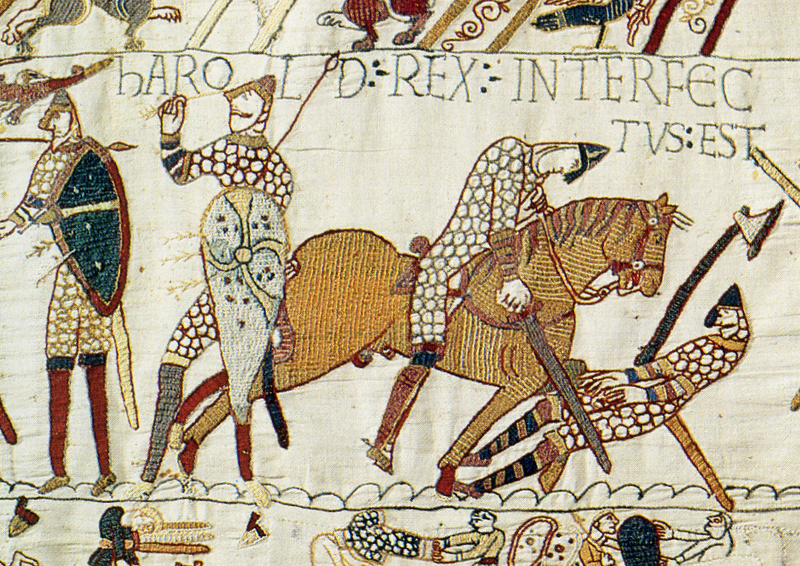
With the initial podcasts I was still more pleased and hopeful. Micheal took three episodes to give a very fine expose around the Battle of Hastings. Along he pointed out how pivotal this battle and the consequent rise to the English throne of William the Conqueror was. I think the cast would have gained in value, or at least maintained this good start, if following episodes would have taken the British History further chronologically and possibly even given some additional outlays of what went on before 1066 and how this led to the rise of William the Conqueror. It would have given the series some more structure. As it developed, however, it began jumping back and forth through history without making much general linking, thus thoroughly settling on the anecdotal level and not adding much insight. That is a pity.

Thursday, May 31, 2007

Haring podcast - niet voor mij

Bas Haring is filosoof. Hij had ook heel esoterisch en wellicht vakmatig verantwoord over praktische vraagstukken kunnen spreken, maar in plaats daarvan heeft hij geprobeerd om het behapbaar te maken voor een breed, om niet te zeggen heel erg breed, publiek. In podcasts van tien tot vijftien minuten buigt hij zich over vragen als 'Zijn wij de enige met geest?', 'Kom ik uit de fabriek?' of 'Mag je masturberen in de trein?'

Neem bijvoorbeeld de laatste vraag: Mag je maturberen in de trein? Het antwoord wordt meteen al gegeven: Nee. En het wordt als een syllogisme in de tweede zin afgemaakt. Het is verboden om je onzedelijke te gedragen in het openbaar; masturberen is onzedelijk en de trein is een openbare plaats en dus: het is verboden te masturberen in de trein. Maar waarom eigenlijk? In een simpele vogelvlucht wordt schaamte, sociale conventie, de beklemming daarvan en de zegen aangestipt. Maar wat voegt een drie-uitspraken interview met een exhibitioniste daar eigenlijk aan toe?

Eigenlijk heel knap en wellicht ook heel nuttig wat Bas Haring doet, maar mij is het net een beetje te simpel. Er wordt een spagaat gemaakt tussen heel zorgvuldig redeneren en analyseren aan de ene kant en vergaande versimpeling aan de andere kant.

Ik heb ooit een uitspraak van Einstein gehoord, dat je iets zelf niet begrijpt, als je het niet aan een negenjarige kunt uitleggen. Dat is een ware uitdaging en als je de filosofie weet te ontdoen van intellectuele esoterie, dan bereik je misschien ook wel een verrijking, maar is dat wat hier gebeurt?

Daalt Haring af naar het niveau van de negenjarige? Ik heb het gevoel van niet. Ik heb het gevoel dat je de negenjarige beledigt. Het is een heel ander niveau waar Haring naar afdaalt, een niveau dat tegelijk hoger en lager is dan dat van de negenjarige. Haring daalt af naar het niveau van de gemakzuchtige TV-kijker. Het resultaat is beurtelings een effectbejag, die die kijker moet binnenhouden (interview met exhibitioniste die niets te zeggen heeft. Is dit TV? Komt ze lekker in beeld?) en dan weer een versimpeling die haast debiliserend is. Dat is geen poging uit te leggen aan een negenjarige, maar naar mijn gevoel een knieval naar anti-intellectualisme.

Alleen aan het slot is Haring weer op niveau en komt hij met de beste uitspraak: Masturberen in de trein mag niet en daar ben ik helemaal voor, maar als je het toch wil, kan ik eigenlijk geen goede reden aangeven waarom niet. En je kan wel verdedigen dat hij heel goed naar die conclusie heeft toegewerkt. Dus eigenlijk best een goede podcast. Alleen ik verdraag het niet.

Wednesday, May 30, 2007

Shrinkrapradio meets Mark Blagrove

There are several podcasts that have interviews as a significant feature (Shrinkrapradio, The Skeptic's Guide to the Universe and Šimek ’s Nachts to name a couple I listen to regularly) and what I find frequently is that the quality of the podcast very much hinges on the quality of the interviewee. Today this became very clear, when I was thoroughly enjoying Dr. David van Nuys in Shrinkrapradio again. He was good old Dr. Dave, with good questions, high audio quality and his own pleasant voice and interview skills. What is more, so I find out, he had a good guest: Mark Blagrove.

What a difference with yesterday, when I listened to the previous podcast Dr. Dave had put out and I was utterly disappointed, but that, also, was with the guest.


In show #92 - Recent Scientific Studies of Dreaming Dr. Dave does a great job in interviewing Mark Blagrove and Mark shows magnificent skill in explaining all the major questions in the scientific study of dreams.

Tuesday, May 29, 2007

Shrinkrapradio meets Curtiss Hoffman

Here is a nice story: In the beginning of time God walked on the face of the earth with the first woman and they discussed what the fate of humanity would be. God picked up a piece of dung with the intention to throw it in the river suggesting: "If it floats, men will live forever and if it sinks, men will be mortal." But the woman stops him, picks up a big rock and says: "I'll toss this stone into the river. If the stone floats, men will live, if it sinks, men will die." God shrugs and lets her have her way and then asks: "Why did you do that?" She answers: "If men won't die, there will be no place for love."


Anthropologist, archaeologist, psychologist and dream researcher Curtiss Hoffman relates a version of this story in the Shrinkrapradio podcast, edition 91, and reveals that this tale in nearly the same fashion is told both by indigenous people in the Sudan as well as in Wisconsin. He goes on to emphasize that these peoples could not possibly have met in history, at least not until the twentieth century, when these stories had long been recorded. Could they?

The more I understand history, the more I find out there has always been exchange between the cultures. So even if indeed the Sudanese never met the American Indians directly until recently, does that mean that until then there were no intermediaries either? Intermediairies that could have carried the story from one culture to another?

I do not reject the idea of archetypes or anything such that indicates some general underlying consciousness in people, but that doesn't mean I take any indication for granted. I'd like to know when these stories were recorded. My hunch is, no earlier than the 19th century, with its Romantic interest in folk tales. How many intermediaries could there have been until the 19th century that could link these two peoples and be a medium to transfer this tale from the one to the other? British colonials had reached both the Sudan as well as Wisconsin by then, so there need be only one intermediary, for all I know. With a couple of more intermediaries, we know the story could have traveled from America to Africa and vice versa, ever since 1492. What is more, there are also things we do not know, exchanges we have yet to discover.

It is still a remarkable story, regardless of a possible direct or indirect contact. The emphasis on the impossibility of the contact seems to want to make it even more remarkable and when such claim is not sufficiently founded and can so easily be challenged, it smacks of fervor, of a thirst for awe, of the want to believe. And that kind of thing gets my hackles go up.

Psychologists know how eager we want to believe something. Two psychologists in one podcast fall prey to their own want to believe. Not just with this story, also on the subject of dream incubation. When Curtiss Hoffman describes the technique, I get to think: this is how you can induce anything into anybody, what is it that justifies the exceptional importance of the induced dream? But both he and show host David van Nuys are so much into dream research that this is hardly challenged. And that is a pity. I am sure such learned people have much to say about the importance of dreams, but they are so full of wanting to show how wonderful all of this is, that they fail to make a point for hard science.

Curtiss Hoffman loses his credit with me when he recounts an occurrence that involved a student of his, whom he describes as a great, or a gifted 'psychic'. I can accept a person to be described as smart, or as insightful, or creative, or even wise. I can accept that occurrences are described as remarkable, as baffling or even as inexplicable, but not as a miracle. Never is someone a psychic, just as nothing is a miracle. Not that I do not allow for belief in psychics or miracles, but I do reject the use of those words. The use of those words reveals an intellectual surrender; one resigns from questioning and explanation. It even gives up proper description and without description, questioning or explanation there can be no understanding and when there is no strive for understanding, frankly, one even gives up on imagination. I hope the upcoming shrinkrapradio podcasts about dreams and dream research (there are three more waiting for me) have more to offer.