Sunday, November 18, 2007

Oxygen - IOT

BBC's In Our Time dove into the history of Oxygen, or rather the discovery of this gas. Could it be claimed by the English (Priestly) or the French (Lavoisier) - a competition that reminds me of the decoding of the the Rosetta Stone. Or should we, maybe for diplomacy's sake, credit the Swedish (Schelle)? Lavoisier ended with a kiss from madame Guillotine and Priestley went bankrupt and fled to Pennsylvania. The end of Schelle was not mentioned.

A truly interesting aspect of this show was the watershed between two different kinds of chemistry. Chemistry as we know it today is all about compounds and elements and as such is very analytic and I'd say, naturalistic. People like Lavoisier are credited from developing chemistry to this kind of a discipline, but at the time, elements were not known and a thinking style wasn't directed at elements. Priestly serves as an example; he was a man who thought in principles. Principled chemistry is less analytic and much less naturalistic. Priestly ascribed to it near mystic qualities; chemistry could be an agent in identifying the good from evil.

In Our Time is a radio program and it is broadcast live. Again, we felt the consequence of this characteristic by the late arrival of one of the guests. Fortunately for IOT, this guest ably adapted to the program and there was no dragging effect. At times that could be different. It goes to show how the traditional way of communicating audio content (radio) is more vulnerable than through the internet, notably through podcasting.

Religious Words

In the latest edition of the Word Nerds Dave and Barbara Shepherd discuss religious vocabulary that is featured in profane language. They relate how an evangelist is any bringer of good news, not just the gospel. A bible has become any kind of heavily thumped handbook, or reference guide. Needless to say, the references are mostly Christian, though I could have thought of some others. Next to paradise we could have had Mecca in a similar meaning; some place being the ultimate spot for a certain experience.

The rude word of the week (every three weeks an episode and still a word of the week) section dives in to all the connections with Holy: as in Holy Cow, Holy Moses and so on, till the PG 13 rating is warranted. Holy cannoli!

Just as they pointed out: the use of religiously associated words sort of erodes the load. I can see this especially clear if I literally translate some common Hebrew, rather day-to-day phrases in secular Israel into English or the even more secular Dutch. If you ask someone 'What's up', in Israel, you may get, even from secular people, an answer that is the equivalent of: Praise the Lord, or: God be blessed. It doesn't make you sound half as orthodox and observant as it looks.

Saturday, November 17, 2007

Ten discoveries that rewrote history

We know Patrick Hunt from his lectures about Hannibal for Stanford on iTunes U. Aside his major investigations on Hannibal and his tenacious quest for identifying the exact route Hannibal took over the Alps, Hunt also serves as a great promoter of archeology in general. He is connected with National Geographic, which will be the first to report any spectacular findings Hunt will make in the Alps between France and Italy.

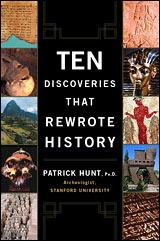
A great promotion for archeology in general is his latest book Ten Discoveries that Rewrote History, which is aimed at the wide public at large. It takes the reader through ten major archaeological discoveries: the Rosetta Stone, Pompeii, Nineveh, Troy, King Tut's Tomb, Machu Picchu, Thera-Akrotiri, the Dead Sea Scrolls, Olduvai Gorge starting with the Leakey Era and the Tomb of the Ten Thousand Warriors in China. Hunt describes how the discoveries were made and why they had such great impact on our historiography.

Hunt personally sent me a copy of his book, after I mentioned his lectures on this blog. Now that I have read the book, I can recommend it warmly. Especially for those who are not terribly familiar with the related histories.

Friday, November 16, 2007

Radio Lab on morality

Both Elizabeth Green Musselman (from the Missing Link podcast) as well as Dan Colman (from the great Open Culture Blog) point to the radio program and podcast Radiolab by WNYC. On their webpage, I saw them point to a show about morality and needless to say, this had me turned on in a minute. That's it with me and morality.

Radiolab is a science show presented by Jad Abumrad and Robert Krulwich (see biographies), who succeed in making light, informative and entertaining conversation about their topics. So do they on morality, only, it is not about morality. Not in my opinion. They sketch moral dilemmas about whether to save many at the expense of a few, but do not enter the issue how we morally solve those problems (if they are genuine problems at all and not such construed riddles that deliberately place you in an impossible position.)

What they take on is the study of what the brain does, while confronted with such dilemma riddles. This is science, true, and it may help understand us more, especially about psychology. Given some extra credit, it may even hand some pointers in ethics, but certainly, we gain no insight whatsoever in what morality is.

Thursday, November 15, 2007

Salon Europa - OVT

De komende 18 weken zal OVT uitgezonden worden vanuit Amsterdam in gezelschap van Geert Mak. Er is een televieserie gemaakt naar aanleiding van Maks onvolprezen boek In Europa - een boek dat ik ook zelf vervuld van diepe indruk gelezen heb. (Mooie aanleiding om het weer eens uit de kast te pakken.) Europa, dat continent van laatbloeiers en de eeuw, de 20e waarin het zichzelf haast om zeep helpt, net overleeft en rijker dan ooit naar het tweede plan schuift.

De eerste aflevering moest natuurlijk over het begin gaan. Er is een discussie over waar de 20e eeuw begint. Hobsbawm's Een eeuw van uitersten (Ook gelezen; ook maar weer eens uit de kast pakken. Gelukkig dat ik ze uit NL heb laten overkomen) laat de eeuw in 1914, bij de eerste wereldoorlog beginnen. Geert Mak, laat zich liever niet tot een discussie verleiden en ziet liever een meetkundige benadering, hoewel je dan weer kan twijfelen tussen 1900 en 1901. Aanwezig is ook de Vlaamse historicus Evert Peeters, die vervolgens voorstelt om meteen maar in 1848 te beginnen. Dat gaat wel heel ver terug.

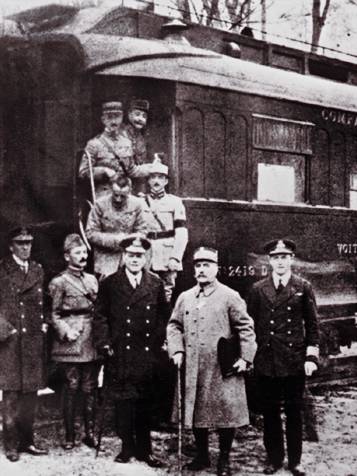
Uiteindelijk kan toch niemand om de eerste wereldoorlog heen, vooral ook niet doordat de uitzending precies valt op de dag van de wapenstilstand: 11 november. Ik ben geneigd met iedereen mee te gaan die met de eerste wereldoorlog de twintigste eeuw wil laten beginnen. Het waarom, is omdat de 19e eeuwse mentaliteit doodgaat in het industriele oorlogsvernuft. Maar waar gebeurt dat het eerst. Misschien al met de Russisch-Japanse oorlog? Of misschien na de kerst van 1914, wanneer de legerleiding aan beide kanten het spontane bestand verbieden. Of misschien aan de Somme, 1 juli 1916. De oktoberrevolutie, 1917? Als uiteindelijk de vrede begint op 11 november 1918, is er geen twijfel meer mogelijk: we staan met beide benen in de 20e eeuw. De 19e ligt dood in de modder. Ratten knagen aan het kadaver.

De vraag gaat ook worden waar het eindigt. Hobsbawm wist niet beter dan in 1989-1991, met de ineenstorting van het sovjetrijk te eindigen. Maar het zal me niet verbazen als de consensus zal worden dat de 20e eeuw eindigt en de 21e begint, op 9 september 2001. Vandaag staan we zeker met beide benen in de 21e eeuw. De 20e is dood, bedolven onder het puin van ground zero.

Ton Boot: Niet praten over winnen

Voordat we het gaan hebben over een prima aflevering van Simek 's Nachts, even nog iets over de podcast. Waarom hebben we nu al maanden geen Simek gehad? Dat komt door de gasten die muziek meebrengen; die nemen natuurlijk geen podsafe music mee - weten zij veel. En dan ga je prakkizeren over de rechten. Ik kan mij niet voorstellen dat het hier om grote bedragen kan gaan, maar misschien wel administratieve rompslomp. En misschien is het fenomeen podcasting nog zo nieuw dat er nog geen echte conventies zijn. Over de op de radio uitgezonden muziek worden rechten betaald, maar moet je voor een podcast hetzelfde betalen? Of meer? Of juist minder?

De oplossing werd om de muziek er simpelweg uit te knippen. Ton Boot heeft het zwelgnummer van Ramses Shaffy meegenomen: zing, vecht, huil, bid, lach, werk en bewonder. Worden we er slechter van om dat lied niet te horen? Och, hooguit een beetje omdat de heren er vrij aan refereren. Je kan het allemaal probleemloos volgen. En zo'n geweldig stuk muziek is het nu ook weer niet. Of mag ik dat niet zeggen?

De uitzending is natuurlijk ook gewoon goed dankzij Ton Boot - daar kan Simek zich geen buil aan vallen. De mooiste uitspraak van Boot vond ik wel dat hij het nooit over winnen heeft. Niet met zijn spelers in ieder geval. Zo'n succesvol coach en dan niet praten over winnen? Hoe zit het dan met dat andere gezwelg? Het opgeklopte positieve denken: En We GAAN Winnen! Boot: "Je moet jezelf niet belachelijk maken." De logica is even simpel als dwingend: je kan de condities voor winst creeren. Je moet doen wat je moet doen en dat moet je goed doen - en meestal win je dan ook. Maar daar gaat het dus niet om. Een wijsheid die verder strekt dan sport.