Wednesday, March 4, 2009

The waste land - In Our Time

Here is a short review of the latest BBC's In Our Time which paid attention to one single poem T.S. Eliot's The Waste Land

Usually IOT tackles huge subjects and therefore, in advance, I was a bit concerned what would happen if Melvyn and the guest had but one single poem to discuss. The limit of the subject turned out to be a blessing though. Still there wasn't time enough, but contrary to normal experience with IOT, more than just the surface was scratched.

Aside from the necessary biographical notes on the author and history of coming in to being of the poem ample time was meted out to quote from the poem, ponder upon its meaning and palette of interpretations. The Waste Land, even though it was seriously edited by Eliot and the poet Ezra Pound which had left it shorter and rather inaccessible, had an enthusiastic reception. A returning meaning in all the ways of interpretation is how The Waste Land captured modernity and the life in the metropolis and did so in rather grim and unforgiving tones.

More In Our Time:
The destruction of Carthage,
The brothers Grimm,
The modest proposal,
History of history,
Darwin special.

AddThis Social Bookmark Button

Anton Kroller - veertien achttien recensie

In de Eerste Wereldoorlog was Nederland neutraal en daarbij lag het ingeklemd tussen Engeland en Duitsland. De neutraliteit handhaven was een oefening op de evenwichtsbalk om niet teveel noch naar Engeland, noch naar Duitsland te hellen. De Nederlandse commercie moest een weg zien te vinden om met beide landen handel te kunnen blijven drijven, zonder de ander op de tenen te trappen.

Hoe moeilijk dat was blijkt uit de laatste aflevering van de podcast Veertien Achttien over de industrieel Anton Kröller die daarbij een weg vond om overzee goederen naar Nederland te halen die langs de Engelse barricade mocht. In het Kanaal hadden de Britten een corridor tussen de zeemijnen aangelegd, zodat elke doorvaart door hen gecontroleerd kon worden. En de Duitsers hanteerden natuurlijk de onderzeeboot. Hoewel Kröller van Duitse komaf was en met een Duitse vrouw (Heleen Kröller-Müller) getrouwd was, lukte het hem het vertrouwen van de Britten te winnen.

Hij organiseerde op centrale wijze de Nederlandse importen en stond garant dat er niet aan Duitsland doorgeleverd werd. Tacken maakt duidelijk dat zelfs indien Kröller daar niet aan deed, er voldoende tussenpersonen waren die de waren oostwaarts konden krijgen. En zo werden Kröller en heel wat andere Nederlanders rijk aan de oorlog. Kröllers winsten gingen naar Heleen Kröller-Müller die ruimhartig investeerde in een kunstcollectie die terug te vinden is in het Kröller-Müller Museum op de Veluwe.

Meer Veertien Achttien:
Rosa Luxemburg,
Marie Curie,
August von Mackensen,
Franz Hipper,
Enver Pasha.

AddThis Social Bookmark Button

Tuesday, March 3, 2009

Iran today - LSE events podcast review

Last summer I wrote about an episode from the UChannel Podcast in which Professor Richard W. Bulliet spoke about the outlook for the Islamic Republic of Iran. The bottom-line of his speech was that Iran was hardly as stable as we'd think and the key moment for its direction were to be the elections expected in March 2009.

Since then, I have been on the lookout for more on Iran and for indicators what to expect at these elections. Consequently, a recent issue of the LSE Events Podcast titled The Islamic Republic of Iran After 30 Years drew my attention. The speaker at the London School of Economics was Professor Fred Halliday. There was little talk of what to expect the coming elections, but more so about the stability of the Iranian revolution after 30 years.

Other than Bulliet, Halliday is arguing that the Iranian revolution is much more resilient than we thought. Halliday touches upon the same problems as Bulliet: Iran's diversity, the economic distress, the international isolation and the suppressed modernity. In Halliday's narrative however, the tensions are dealt with very well and he emphasizes the political tradition in which Iran stands, a tradition of nationhood, as opposed to for example Afghanistan where the traditional structure is tribal rather than national. Halliday's bottom line seems to be that the Iranian revolution will survive whatever outcome of the elections.

More LSE Events:
Science and Religion,
The crisis,
Desiring walls,
The Post-American World,
Reparing Failed States.

AddThis Social Bookmark Button

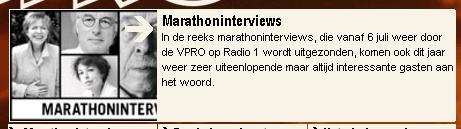
GBJ Hiltermann - VPRO Marathon Interview uit 1992

Hoewel het 'not done' was om naar Hiltermann te luisteren en zeker om het met hem eens te zijn, er was een onbetwistbare autoriteit die hij bezat en die hem een leven lang tot de man van 'De toestand in de wereld' heeft gemaakt. Hiltermann was de specialist van de geopolitiek van de 20e eeuw. En vooral van de koude oorlog, die nog maar net voorbij is in 1992 als Ger Jochems hem voor de VPRO radio interviewt. Het marathon interview met Hiltermann levert niet alleen een hier en daar verrassende kijk in het denken van de commentator, maar ook in de a prioris van het westerse denken die sinds het begin van de 21e eeuw volop aan het wankelen zijn geslagen.

Wie Hiltermann als speciaal rechts en conservatief heeft voorbestemd, zal hier en daar op een verrassing stuiten. Bepaalde aspecten van het sovjet-systeem worden door hem gewaardeerd. Verder pleit hij voor het beschikbaar stellen van fondsen voor cultuur, wat toch niet duidt op een gestaald kapitalisme. En ten slotte zijn de haast mystieke uitspraken over de speciale taak waarvoor bepaalde regeringsleiders 'bedoeld' zijn, haast nergens thuis te brengen.

Dat zijn dus de opmerkelijke uitspraken die Hiltermann markant en het interview spannend maken. Dat neemt echter niet weg dat we de oer-conservatief, of zo men wil de neo-conservatief het meest te zien krijgen. Het westerse staatsbestel staat buiten kijf, het westen met zijn technologisch en economisch vernuft is superieur en de rest van de wereld dient daar toch maar voorbeeld aan te nemen. En als Hiltermann het over ongewenste intimiteiten heeft, weet je echt dat de tijd van zijn denken geweest is. Het was overzichtelijk, de rolverdeling van goed en slecht, superieur en inferieur was helder. De toestand in de wereld zou nooit meer als die van Hiltermann zijn. Zeker niet na zijn sterfjaar 2000.

Meer Marathon Interviews:
James Kennedy,
Dick Berlijn,
Ward Ruyslinck,
Marte Röling,
Remco Campert.

AddThis Social Bookmark Button

Monday, March 2, 2009

Europe versus Islam - David Levering Lewis's reverse view

Ever since Professor David Levering Lewis produced the book God's Crucible; Islam and the Making of Europe he is touring the lecture circuit to speak on the subject. At the London School of Economics he appeared nearly a year ago and I reviewed the LSE podcast with the lecture then. Just now, UChannel Podcast published another one at Vanderbilt with the same title, A Counter-Narrative: Islam and the Making of the First Europe , where the audio is much better and the professor is more streamlined with the subject.

Basically the book and the lecture are about history and offer a different perspective on two battles long, long ago in history: The battles of Tours (732 AD) and Roncevaux (778 AD), which would be merely academic, had these battles not profoundly defined our narrative of European History and Identity and pitted the Christian West in an irreconcilable enmity towards the world of Islam. Roncevaux is the tragedy better known in its retelling in the Song of Roland. In this reconstruction Roland is the tragic hero of pure and uncompromising Christianity. The evil of the Islam is a given and its threat not questioned.

David Levering Lewis paints a whole different picture though. Exemplary is the cohabitation of Christians, Jews and Muslims in Spain before the reconquista, which allowed for a golden age for all. The mentality of Tours and Roncevaux reject that culture however and plunges Europe in a prolonged era of savagery until the Renaissance. It may now be responsible for the similarly unremitting Islamism. The counter-narrative, offers an alternative for our definitions of self and our relationship with the world of Islam. This history shows that the, albeit more complicated and demanding, cohabitation is far more advantageous than the eternal pitted fight. That makes the Song of Roland relevant for today and requires of us to evaluate its defining narrative anew.

More UChannel Podcast:
Power of Cities,
Gaza (Tony Blair),
Whither the Middle East,
Kafka comes to America,
Lord Lawson and the alarmists.

More Islam and Europe:
Europe and the Middle East,
Battle of Tours ,
Islam and Europe,
Making of the Modern World - UCSD,
Islam meets Europe.

AddThis Social Bookmark Button

Anne is a Man in the week of March 2

Here is a schedule of what you can expect this week on Anne is a Man!

- A counter-narrative about Europe and Islam. Professor David Levering Lewis on UChannel Podcast. The separation and enmity between the worlds of the European West and the world of Islam has hurt both sides more than done good. Whereas the peaceful cohabitation in Spain before the reconquista was profoundly beneficial.

- VPRO's Marathon Interview. Ger Jochems speaks for five hours with G.B.J. Hiltermann the proverbial conservative commentator on geopolitics in the Dutch media during the Cold War. Hiltermann surprises, with among others remarks of admiration for the Soviet system. (Dutch)

- The Islamic Republic of Iran after 30 years, Professor Fred Halliday argues the strength and resilience of the ayatollah revolution on an event at the London School of Economics - LSE Events podcast.

- Anton Kröller the Dutch industrialist who made a fortune of the Great War and the Dutch neutrality and whose wife, Helene Kröller-Müller, got to spend the millions on modern art. Veertien Achttien podcast (Dutch)

- The real war in Gaza; Asher Susser on the UCLA Israel Studies Program. Again, the real war in Gaza was the war between the moderates and the fundamentalists. A slightly more successful attempt at construing events this way than the previous issue at UCLA, by Jacob Dayan.

- The fox and the hedgehog. An exceptional issue within the series From Israelite to Jew, where an approach to Talmud is suggested and a very profound line of thinking in many more fields of experience and thought comes out.

- How the fingers fork, your family lives history and Marlbourough cunningly keeps the alliance together in the latest issue of Historyzine. Also: a review of BBC's In Our Time

- Speaking of which: BBC's In Our Time has touched upon the Jaipur Observatory and upon the poem The Wasteland and there will be a new episode by Thursday. There is at least one review needed.

By Friday, I will hopefully be able to give a projected schedule for the weekend, or otherwise on Monday for next  week.

Subscribe in a reader
Paste the link
http://feeds2.feedburner.com/Anne_Is_A_Man
into the RSS reader of your preference. (What is RSS?  - Help on getting subscription)

I love to get new podcast recommendations. You can let your preferences know by commenting on the blog or sending mail to Anne is a Man at: Anne Frid de Vries (in one word) AT yahoo DOT co DOT uk

Connect with Anne is a Man on:
Facebook,
Twitter,
The Podcast Parlor.