Showing posts with label bioethics. Show all posts

Monday, November 2, 2009

Stem Cell confusion - Speaking of Faith

This weekend, out of curiosity, I listened to Speaking of Faith in a different way. Since the uncut interview was placed in SOF's podcast feed, I decided to listen to this raw material first and then go to the official radio broadcast (and podcast) Stem Cells, Untold Stories - interview with Doris Taylor.

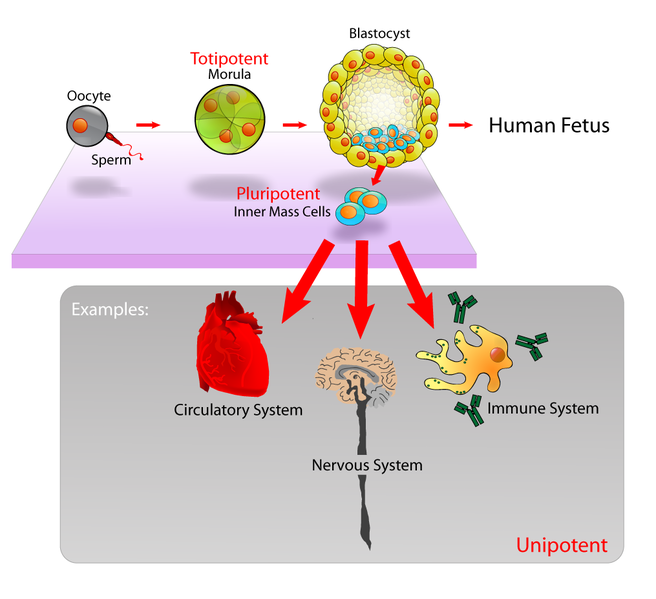
To make a long critique short: the program is better. The raw material really is elevated to greater expression, greater meaning. The issues come out more distinct and more focussed. And this issue is Stem Cell therapy. Doris Taylor is a scientist who works with stem cells and gets all the room Speaking of Faith can give to show how Stem Cell therapy and research can be and should be done morally. She defuses the ideas that the use stem cells involve aborting embryos for the sake of science and medicine and lead to limitless quest for naturalistic knowledge. The way she sees it, the cells that are used are either not coming at the expense of life, or are cells from fertilized eggs that are otherwise thrown away and there, at least technically, do not go at the expense of life. And in turn, stem cell research and therapy, radicalize medicine and creates hope for life for people with heart conditions or with cystic fibrosis, to name but a few examples.

Though this certainly doesn't take the sting out of the critique of stem cell technology, she may have a point that the public debate has been contaminated. It has unnecessarily been drawn into this seeming discussion about whether 'life' could be 'used'. This she attributes to the terminology as it became established. Embryonic stem cells, are in the parlance and apart from making the term emotionally laden, it is technically wrong as the cells are not embryonic (not even those from fertilized eggs). The quality of this show was that it took the technical angle, without becoming too technical and could begin to enter the social and moral implications.

More SOF:
Preserving Ojibwe,
The story and God,
Fragility and Humanity,
The Sunni-Shia divide and the future of Islam,
Wangari Maathai.

More on stem cells:
The bioethics concern,
Regenerative Medicine - Stanford,
Straight Talk about Stem Cell Research,
The Ethics of Stem Cell Research,
Human rights and the body,
Life and bio-engineering - podcast review,
Bioethics without Christ, please,
A useful map into Bio-Ethics,
Stem Cell Research: Science, Ethics, and Prospects,
Stem Cell,
Stem Cells - Biology and Politics.

Thursday, June 25, 2009

The bioethics concern - Third Reith Lecture

Michael Sandel's third of BBC's Reith Lectures 2009 had me thoroughly excited. Those who have followed this blog over a long period may recall my search into the field of bioethics, looking for a way to bring together the need for cures and for scientific research with the intuitive qualms with us meddling with the building blocks of nature. It never got beyond that dilemma.

Sandel, however, succeeded in his third lecture, Genetics and Morality, to analyze the ethical qualm, this nagging intuition, into its rational components. I was so excited while listening, trains of thought kept springing up, making things clear in my age old search (I have been troubled since 1989 with this), yet making me lose track of the podcast. I have listened to it three times now and still not covered it all. Fortunately there is a transcript (Genetics and Morality - in rtf).

Sandel's method is to strip the intuition from its fears and see if there is something left. So, suppose meddling with genetics is not dangerous for our health, suppose allowing a free market force to be at work does not lead to reduced genetic diversity, suppose the benefits are available for all and elevate the weak and the poor, suppose we can handle the greater responsibility that comes with having greater influence on life, what still seems to be the problem? Applied to having children it looks like we reduce children to commodities. We can design them, order them as we like, we can fully repair whatever looks to be imperfection. This is a loveless meritocracy. We will have lost the quality to work with what we get, to appreciate the contingencies of nature. We will have submitted to a morality in which human being is not good enough unless it meets an ever rising set of standards.

We will abort the child with legs of uneven length, because we wanted a football star. And we will kill Garrincha, a man with several birth defects to become one of the best players next to Pele.

More Reith:
Morality in Politics,
Morality and the Market,
Michael Sandel - Philosophy Bites.

More Bioethics:
Regenerative Medicine - Stanford,
Straight Talk about Stem Cell Research,
The Ethics of Stem Cell Research,
Human rights and the body,
Life and bio-engineering - podcast review,
Bioethics without Christ, please,
A useful map into Bio-Ethics,
Stem Cell Research: Science, Ethics, and Prospects,
Stem Cells - Biology and Politics.

Tuesday, August 26, 2008

Regenerative Medicine - Stanford podcast review

Stanford has released the third podcast lecture series on the subject of Stem Cell Research and it is called: Replaceable You. This will be about regenerative medicine, which is more widely set up than the previous Stem Cells: Policy and Ethics and Straight talk about stem cell. This series consists of four two hour long lectures of which I have heard, so far, the first two. These lectures are given by a new lecturer: Professor Jill Helms.

This series until this point does in one way more and in one way less than the previous. Helms gives, at least until half way, much less attention to ethical and legal issues and seems intent on continuing to do so. She happily tries to assume that her whole audience is in favor of Stem Cell Research and get the normative angle off the table. As if being in favor means you are not interested in addressing ethics. That is a deception

On the other hand, she very effectively explains in a much wider range what Stem Cell Research means and this is where the lecture series is significantly adding to where professor Christopher Scott in the previous series left off. Stem Cell Research and technology are part of the scheme of regenerative medicine. In stead of supplying the maligned body with prostheses, or leaving it to heal itself, which mostly gives useless scar tissue, the goal is to allow man to grow anew, like newts that grow back entire limbs in case they lose them.

More bioethics:
Straight Talk about Stem Cell Research,
The Ethics of Stem Cell Research,
Human rights and the body,
Life and bio-engineering - podcast review,
Bioethics without Christ, please,
A useful map into Bio-Ethics,
Stem Cell Research: Science, Ethics, and Prospects,
Stem Cells - Biology and Politics.

AddThis Social Bookmark Button

Tuesday, July 15, 2008

Straight talk about stem cells - Stanford lecture series review

Christopher Scott is a professor at Stanford and one of the very few in podcasts whom you can hear touch upon stem cell research and talk about both the technical as well as the legal and ethical side. Recently I reviewed his latest lecture series, which Stanford has put on line as an enhanced podcast. (Stem Cells: Policy and Ethics - feed)

Already in that review I wrote there is an earlier enhanced podcast, also by Chris Scott and also about stem cells called Straight Talk About Stem Cells (feed). I promised a review, which I give here, although it will be a short one. Straight Talk About Stem Cells is the predecessor of Stem Cells: Policy and Ethics and suffers from two traits that make it rapidly redundant. On the field of ethics and politics (law), there has not been much news and what little there is is added in the new series. The technical advances go very rapidly though. Here is where the two series are radically different.

For information on the techniques, I'd gladly point at Straight Talk as well, however, I wonder how much is still relevant. If I paid proper attention, which I did as much as my very limited biological skills allow, there was information in the first series that suggested certain lines of research to be with little chance of success, or facing too much of technical difficulties or any of such inhibitions that sort of suggested the conclusion that this was not a realistic prospect, whereas the second series comes after soem major breakthroughs and paints a radically different picture. Hence, if you want to know if for example so-called adult stem cells are a way to go, you may find conclusions differ. If next year there is going to be a third version, who knows what we will get by then.

And the law? And the ethics? Most of the slides are reused, and probably will be again. That alone tells us a whole lot.

More bioethics:
The Ethics of Stem Cell Research,
Human rights and the body,
Life and bio-engineering - podcast review,
Bioethics without Christ, please,
A useful map into Bio-Ethics,
Stem Cell Research: Science, Ethics, and Prospects,
Stem Cells - Biology and Politics.

AddThis Social Bookmark Button

Thursday, July 3, 2008

Life on the Scales - Philosophy Bites podcast review

Philosophy Bites is a podcast that delivers concise weekly conversations on a philosophical topic. All this happens in a balance act between the levels of academic philosophy and the target of wrapping up the academic discourse in ten, fifteen minutes and have a product that is accessible to a relatively wide public. Generally the podcast succeeds in doing that and it makes it a treasure trove from which you can pick the subject that appeals to you and get boosted with insight, perspectives and level of your starting point.

I am very interested in controversies that pit our intuitions and rationality, our various values and principles against each other in real dilemmas. One such hot potato is the discussion around stem cell research and more general discussions on bio-technology and ethics. All this is about life and drags us into the position we have to weigh lives or consider how this can be done (if it can be done at all and if it is ethical to even engage in such questions). Hence, the last issue of Philosophy Bites drew my immediate attention: John Broome on weighing lives. (John Broome is a philosophy professor at Oxford, and wrote a book with on weighing lives.)

Broome handles the uncertainties involved in the issue with decision theory. And this allows for rationalizing and while not always people take their decisions this way. During the podcast I could forget my qualms about raising the question at all - intuitively I have a feeling the question of the weight of life is vicious to begin with. The examples are of practical nature, both individually as well as on the level of policy. Broome also adds to the decision theory; he introduces fairness and goodness. He also understand the horror I feel around this question, but by emphasizing that decisions must be made and any old tool that helps should be appreciated. It remains a balancing act with contradicting principles after all - also with what Broome contributes.

More Philosophy Bites:
David Hume,
Several issues of Philosophy Bites,
Free rider problem,
Humanism,
Is war innate?

AddThis Social Bookmark Button

Friday, June 27, 2008

The Ethics of Stem Cell Research

I have discovered an earlier enhanced podcast from Stanford University on Stem Cells, Straight Talk About Stem Cells (feed), but I started with Stem Cells: Policy and Ethics (feed), because it by virtue of its title promised to touch upon the ethics involved - and that is where I want to get at. I have written about the subject before and bumped into a problem that roughly goes as follows: you either have an ethical podcast, that rejects Stem Cell Research on religious grounds and doesn't explain much about the technical side of it, or you have a technical podcast that implicitly approves, but doesn't discuss much in the way of justifications.

Out of the five lectures in this podcast, only the last lecture really attempted to bridge the gap, but also the first four are rather interesting just the same. To have the basic technique explained (with pictures), helps a lot. The lecture on the various regulations also was instructive. The guest lectures of one specialist and one patient who had undergone stem cell therapy, were a very instructive.

Even if there isn't much in depth ethics discussed, at least the concrete examples of techniques, research and therapies, allow for giving a good inventory and some narrowing down into very specific ethical issues. In short, of all the podcasts I have heard in this subject, this one ranks among the very best.

More bioethics:
Human rights and the body,
Life and bio-engineering - podcast review,
Bioethics without Christ, please,
A useful map into Bio-Ethics,
Stem Cell Research: Science, Ethics, and Prospects,
Stem Cells - Biology and Politics.

AddThis Social Bookmark Button

Sunday, June 1, 2008

Human rights and the body

A lecture on Human Rights at the London School of Economics (LSE podcast, UChannel Podcast) gave some food for thought on a long quest of mine - reported here on the blog as well. There is no definitive answer, but on the quest for insights in bioethics, the LSE lecture by Rowan Williams (Archbishop of Canterbury), we come to understand the necessity of connecting human dignity to the body.

The title of the talk is Religious Faith and Human Rights and this gives, in my humble opinion, much less indication of what is to come. It is about human rights all right and Williams applies his faith in order to establish the connection with the human body. However, his argument is lucid and rational enough to be a strong point, regardless of what faith one follows, if any at all. If human rights are about dignity and integrity, this must be applied to the physical part (or whole, if you will) of the human being.

What is the essence of humanity? Is it rationality, ethics, aesthetics, emotions, free will, faith, spirituality? Is it the soul or in so many words, is it in his higher qualities and not in whatever beastly likeness he has to animals? Williams shows the danger of disconnecting the human from his body. before you know it, you open the road for making distinctions among humans, between those who have and those who do not have the higher qualities, whether soul, spirit, ethics, rationality and such. Williams proposes to make human rights, or in other words human dignity (and I might add human integrity) indivisible from the physical presence. When there is a body, there is a human endowed with full rights. transcript of the lecture

Such an approach may give some guidance in issues of capital punishment, abortion, euthanasia, bio-engineering and more.

More LSE:
Nuts and bolts of empire,
Islam and Europe,
Beyond the genome.

More bioethics:
Life and bio-engineering - podcast review,
Bioethics without Christ, please,
A useful map into Bio-Ethics,
Stem Cell Research: Science, Ethics, and Prospects.

AddThis Social Bookmark Button

Saturday, May 3, 2008

Life and bio-engineering - podcast review

WNYC's Radiolab tackled Life as a subject. In a way there were two subjects and the bridge between them was somewhat flimsy, if you ask me, but nevertheless they were fascinating and both pertaining life, although not exactly as we know it.

At first they built up to a short interview with a chimera. Karen Keegan from Boston one day found out she was a twin in one person. Part of her organs genetically were her sister's and part were hers. They blended into one functioning human during the earliest stages of pregnancy. That is a chimera.

The bridge, as said, to bioengineering is not so compelling, but one wouldn't give up such a juicy story as Keegan's. Now hosts Krulwich and Ambumrad take on a couple of working examples of bioengineering: microbes that got new DNA in the lab in order to get functions they naturally do not have; human DNA implanted in other organisms. Eventually, life could be designed, as such.

The undertone in the last subject, and basically of the program is: is this right? One conclusion that stands out is: it could be dangerous considering we already have begun engineering while we still know so little in microbiology. But ethically? Even if we can make things work. We can cure disease, let microbes solve pollution and the energy problem? Is that right. Krulwich expresses it intuitively: it doesn't feel right, but other than that this question is not explored. It is as if they lack terms, or an entry into the philosophy.

In the past I have noted this inability apart from one podcast, the bioethics podcast, which knows it full well, but is so exclusively predisposed with its Christian fundamentalist outlook on the world, that it doesn't satisfy the need for a universal and not strictly evangelical answer.

More Radiolab:
War of the Worlds,
Wright Brothers,
Morality.

Bioethics:
Bioethics without Christ, please,
A useful map into Bio-Ethics,
Stem Cell Research: Science, Ethics, and Prospects.

AddThis Social Bookmark Button

Monday, December 10, 2007

A useful map into bio-ethics

I have complained in the past, I couldn't find a satisfying way into questions of bio-ethics through podcasts. I encountered factual explanations of what the bio-technology is capable of (or could be) or an overly religious version of ethicizing which gave me the idea the conclusions were set in advance. With a recent podcast from UChannel, I was refreshed with a more complete approach: Beyond the Genome: the challenge of synthetic biology.

Oct 24, 2007 at London School of Economics and Political Science (LSE): The 1970s introduced genetic modification, the 1990s cloning and GM food, and the human genome was sequenced in 2000. Synthetic biology is heralded as the next frontier. But what is synthetic biology and how do we imagine its future directions? What are the implications of this new field for scientists, lawyers, regulators and ethicists? What social and political challenges does it pose and what role will the social sciences, the humanities and the public play in shaping the direction of this new field?

Panelists: Sarah Franklin who does anthropological research around synthetic biology; Peter Lipton the philosopher (he appears here one month before his untimely death); Chris Mason Head of the Stem Cell and Regenerative Medicine Bioprocessing Unit in the UCL Advanced Centre for Biochemical Engineering; Dr J Craig Venter founder of The Institute for Genomic Research.

Thursday, October 25, 2007

Bioethics without Christ, please

The Bioethics podcast delivers two episodes (048 and 049) which together are a lecture by Amy Laura Hall, Ph.D. titled Conservative and Liberal Bioethics. This is a lecture of which I expected a lot and eventually eluded me altogether. I can appreciate that Hall is a conservative and is not poised to represent Liberal Bioethics in an advantageous light, but I was hoping to get a little bit more information, so that I could better understand what it is and how it is different from the Conservative view.

Unfortunately, Liberal views are hardly outlined and as far as I was hoping to be introduced into the Conservative view, I am left a bit frustrated also, I wouldn't be able to repeat. It makes me think Hall was speaking for her own parish and such may explain better so, what beginning and end held the lecture together.

The beginning is that Hall complains she has to explain to liberals that there can be no ethics without a believe in God, 'till she is blue in the face'. How so, I wonder, though I can anticipate some of the thinking. I can even appreciate it, when we treat 'God' as an abstract supreme order, and not as Christ, G-d or Allah, for that matter. According to the end of the lecture, Hall's version is clearly Christ. And she utters the last sentences in the way of liturgy, in the language of worship and not of rational discourse. What I make of it is that The Crucifixion of Christ is in her opinion the most important happening in past and present and has everything to do with Bioethics. At that point, it is entirely beyond me what is talking about. How could I, I am not a member of the liturgy anyway.

I want to engage in Bio Ethics, but here I am shut out of the deal, not on the grounds of my opinions, nor my intelligence, nor my writings, but on the ground of not being a member of the club. I wonder whether this is ethical at all.

Monday, September 24, 2007

Having a hard time with the Bioethics podcast

The center for bio-ethics and human dignity claims to be "Exploring the nexus of biomedicine, biotechnology, and our common humanity." It begins to state as its purpose to "equip thought leaders to engage the issues of bioethics using the tools of rigorous research, conceptual analysis, charitable critique, leading-edge publication, and effective teaching." As someone who has a concern about the ethical and social implications of the ever advancing bio-technology, I was happy to find this organization and begin to listen to their podcast.

Many of the other educational podcasts I know that address issues of bio-technology, tend to be rather technical and research oriented in their approach and mostly address the methods and techniques of technology and scientific research The ethical concerns are much more side-lined. As a consequence I very much wanted to find a podcast that approached the subject from the ethical side. The Bioethics podcast, is such a podcast.


Sofar, however, I severely put off by what podcasts I have heard in the way they stress their Christian nature. The concerns in bioethics are presented in the light of a belief in God and Christian principles. As someone who is secular and for many practical purposes, if not Jewish, certainly no Christian, I feel shut off from the subject. I am going to persist and check the content that is delivered by the CBHD. I do want to find out more about the ethical issues with advancing bio-technology and healthy reserves in the name of human dignity are necessary to keep in mind while advancing. I take those principles to be universal and would expect from the CBHD to assume the same. Even if the organization and its members find their origin and inspiration in Christianity, the universality of their enterprise should beg them to restrain to link their findings exclusively to faith in Christianity. They do not seem to actually believe for being a true ethic one needs to be Christian, but it would suit them not to create an atmosphere where that is the practical consequence of their rhetoric.

Sunday, September 23, 2007

Stem cell

A few days ago, I already announced the University Channel podcast, was going to pay attention to the stem cell issue again. Stem Cell Research: Science, Ethics, and Prospects, a panel discussion with Dr. Gregory Eastwood, interim president of Case Western Reserve University. Insoo Hyun, Assistant Professor of Bioethics, Case Western University. Horst von Recum, Assistant Professor of Biomedical Engineering, Case Western Reserve University, offered, in my humble opinion, slightly less than the lecture by Douglas Melton. It did not present too much new information and was maybe hampered by the order in which I heard both podcasts.

What they have in common is that, in my experience, they take more of the technical perspective. That should not surprise for a podcast coming from a university and it filled a very large gap in my factual knowledge, so that the political ethical discussion could be elevated. But as of this point, I feel a great need to hear a pure ethical discussion and have some conservative standpoint be the starting point.

I hope UC podcast will offer that, if not they, then maybe some other podcast. A search on 'stem cell' in the iTunes directory gave hardly anything but science results, nothing tagged philosophical, religious or such. A search on Google, got me a Christian bio-ethics podcast. Maybe I'll get round trying that one.

Cartoon: Gary Markstein

Thursday, September 13, 2007

UC podcast: Stem Cell (Biology and Politics)

Last June the University Channel podcast invited Douglas Melton to lecture on stem cells. There is so much political disturbance going on around stem cell research, we need to know what exactly we are talking about.


Dr. Melton does a tremendous job explaining what stem cells are and what the research is used for to the layman such as myself. And I used to be a certified dunce in biology. I find it too much of a challenge to repeat here anything of what he has said, but I strongly advice everybody to listen to this podcast, or view the video (various streaming options). In the end it helps to know more about the technical aspects of the science in order to get a clearer view on the moral debate and avoid the digressions of the political debate.

A couple of days ago yet another UC podcast was published on this subject: Stem Cell Research: Science, Ethics, and Prospects, a panel discussion with Dr. Gregory Eastwood, interim president of Case Western Reserve University. Insoo Hyun, Assistant Professor of Bioethics, Case Western University. Horst von Recum, Assistant Professor of Biomedical Engineering, Case Western Reserve University. So there is more to come...