Thursday, September 13, 2007

UC podcast: Stem Cell (Biology and Politics)

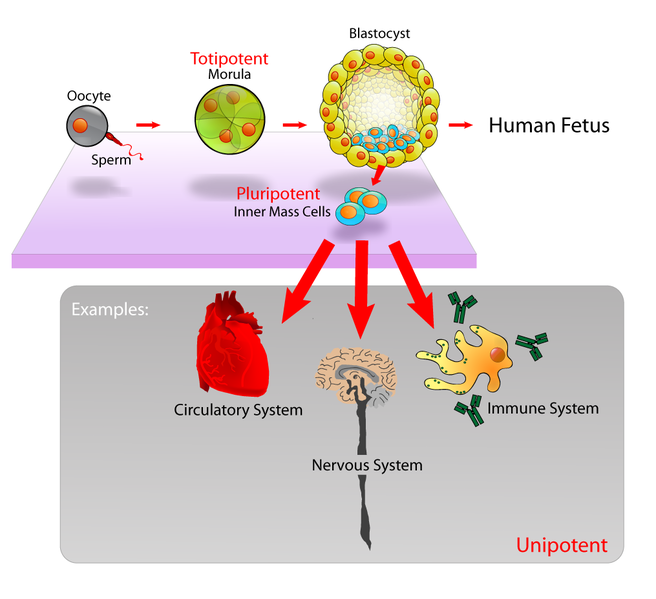
Last June the University Channel podcast invited Douglas Melton to lecture on stem cells. There is so much political disturbance going on around stem cell research, we need to know what exactly we are talking about.


Dr. Melton does a tremendous job explaining what stem cells are and what the research is used for to the layman such as myself. And I used to be a certified dunce in biology. I find it too much of a challenge to repeat here anything of what he has said, but I strongly advice everybody to listen to this podcast, or view the video (various streaming options). In the end it helps to know more about the technical aspects of the science in order to get a clearer view on the moral debate and avoid the digressions of the political debate.

A couple of days ago yet another UC podcast was published on this subject: Stem Cell Research: Science, Ethics, and Prospects, a panel discussion with Dr. Gregory Eastwood, interim president of Case Western Reserve University. Insoo Hyun, Assistant Professor of Bioethics, Case Western University. Horst von Recum, Assistant Professor of Biomedical Engineering, Case Western Reserve University. So there is more to come...

Wednesday, September 12, 2007

Robert Kranenborg bij Martin Simek

Simek 's nachts is natuurlijk geen kookrubriek. Maar als Robert Kranenborg op bezoek komt, komen er onvermijdelijk vragen over koken, ingredienten en aanverwante zaken aan de orde. Ik had Martin wel willen souffleren, maar nogmaals, het is geen kookrubriek. Het ging meer om de grote lijn.

Ik zit nog wel te piekeren, waar het dan wel over ging. Natuurlijk ging het over koken en het ging ook over het reizen en eten voor het beroep. Over michelin sterren. Over kinderen. En Martin vertelde zijn eigen ervaring met betrekking tot de slacht van een varken. Het was een uitzending zoals we deze rubriek goed kennen.

Klink ik wat minder enthousiast? Ik heb het gevoel dat ik een beetje overvoerd ben met Simek, dat, of hij is zijn edge kwijt. In mijn oren kabbelen de interviews een beetje teveel de laatste maanden. Maar dat kan ook aan mij liggen.

Tuesday, September 11, 2007

Dan Carlin's hard times

The latest edition (#15) of Dan Carlin's Hardcore History was originally set up to discuss the depressio0n of the 30's and its effects on people. As it worked out, Dan holds a more general monologue pondering human nature and its complex relationship with hard times. We strive for the good times, but it is the hard times that makes us better people, and consequently more apt in reaching the good times; so I take Dan's basic tenet. It makes me think of G. B. Vico's idea that civilization goes through cycles. Together we get the idea that hard times bring about stronger people, building the good times, in which people slide into decay, beckoning in the hard times again.


Let's be fair to Dan, he ponders the idea. He seems to be mildly convinced but does not fully comply and declare that this is his theory. And I personally wondered about the measures to which hard times can become so tough that they traumatize and effectively degrade people. That idea is hardly touched upon

Saturday, September 8, 2007

Marathon interview Jan Wolkers

Vroeger duurde het marathoninterview 5 uur. Deze zomer was het 'slechts' 3 uur. Het is de vraag of dat zo'n achteruitgang is. Ik heb behoorlijk genoten van de interviews deze zomer en ik kan ze vergelijken met een aantal oude, doordat de VPRO ze eveneens als podcast on line is gaan zetten. Zodoende kwam ik Freek de Jonge tegen, waar ik eerder over schreef. Ondanks een lichte teleurstelling begon ik vol goede moed aan de anderen. In de interviews met Kees Fens en Johnny van Doorn is men kennelijk op voorhand al moe van de lange zit en is lamlendigheid troef in het eerste uur, zodat ik het vervolg maar meteen heb opgegeven.

Ik begon al bijna te denken dat 5 uur, in alle gevallen teveel van het goede is, maar toen begon ik aan het interview dat Ronald van den Boogaard in 1986 had met Jan Wolkers. Dat begint niet alleen goed, dat wordt ook steeds beter. Zo onvoorstelbaar goed zelfs, dat Cor Galis bij de aankondiging van een volgend uur de heren vraagt of het niet wat minder kan. Waarom zo'n oproep, dat snap ik niet helemaal, maar het is, hoe krom ook, wel een sterke indicatie hoe dit sprankelende radio is, die je aan je oordopjes gekluisterd houdt.

Wat mij geweldig bekoort in het interview is het onverstoorbare zelfbewustzijn van Wolkers. Hij stelt dat hij zich niet voorbereid heeft en zo komt het ook over. En zo gedraagt hij zich impromptu en zo vers van de lever is hij geweldig authentiek en authentiek geweldig. Voeg daarbij dat de interviewer zich uitstekend ingelezen heeft en Wolkers waardeert, zonder te vervallen in ademloze bewondering en de twee heren gaan geanimeerd op pad en laten elkaar niet meer los. Op zeker moment laten ook de radiopauzes (nieuws op het hele uur een een kleine storing) de heren niet meer van hun a propos brengen. Je zit er als stille deelnemer aan het intieme gesprek bij. Wat een delicaat genoegen.

Friday, September 7, 2007

Cyber rules (Wise Counsel)

Cyberspace is changing our world. The internet is completely intertwined with the rest of life and for the generation growing up right now, it has always been that way. Just as in physical space we exist as individuals and as a community, we do so in cyber space. On a side note, I would like to state that cyber space will offer us additional ways to express and develop ourselves, rather than to give a second life and act out with another identity. That last option in cyber space has its interesting prospects, and may be useful in a sense, but I fail to see how it must develop into the major essence. And so we live in a broad and varied world that is partly electronic and by virtue of electronics, we act globally.

Such revolution in the human condition begs for the discovery and construction of new rules. Psychologist Joanie Gillispie has written a book about the cyber rules. She has already been interviewed by Dr. Dave on Shrinkrapradio, as I recounted before, and now Wise Counsel has produced another interview between them. I wonder whether the Wise Counsel interview actually took place before the one on Shrinkrapradio, but in any case the issue on SRR has been released prior to this one.

What I like especially about Gillispie's expose is the optimism. It is not just about the cyber rules, that need to be discovered and developed, but also a statement, in modern talk that cyber space rules. Cyber space has become dominant and is not going away. Her insights offer an initial guide into how cyber space can be explored and consequently enrich our lives. A truly valuable podcast for all internet users great and small.

Thursday, September 6, 2007

Steven Levenkron on Wise Counsel

I am never sure whether alleged statistics about sexual abuse of children are really trustworthy. Not because I think they are too high, or even too low; I think the truth might go either way. It is just that I fail to see how we could ever uncover all of that knowledge. Regardless of the accurate figures, I think there can be no doubt, sexual abuse is a serious social problem. And a social problem with horrendous implications on the individual level. I have been confided in by not very few people about the abuse they have had to suffer at an early age. And not just women victims, I must add.

Global authority, author and therapist on the subject is New York doctor Steven Levenkron. He is interviewed on the podcast of Wise Counsel, by the talented podcaster and fellow psychologist David van Nuys. The talk is as compelling and qualitative as we can expect from Dr. Dave. Even if the talk is exclusively of female victims; I can easily extrapolate to the male ones I know of.

Interestingly, a large proportion of Levenkron's patients do not come into his office as sexual abuse victims per se. The larger proportion comes in on account of having to deal with self-mutilation. 'Cutting', he calls it and he has written an important book on the subject. (see picture above) Another section are anorexic or compulsive, but for many of them, the sexual abuse root of the problem, sadly, is unearthed sooner rather than later. On a side note: a male victim I know, suffers not only from self-mutilation and compulsive behavior, but also from anorexia.

Hence, and this has also lead to the interview, Levenkron has written a book about the understanding and treatment of women's sexual abuse. The book is called 'Stolen Tomorrows' which I find a very appropriate title. I shall read the book and find out what applies to men that are victimized by sexual. I expect it will be nearly everything, except for a crushingly sad additional fact: sexually abused men, have a tendency of turning in to sexual abusers themselves. As to the statistics this implies that today's statistics, whatever the exact figures, will account partly for tomorrow's. Hence, in every case of abuse not only tomorrow is stolen, the day after tomorrow may have gone missing as well.