Tuesday, December 4, 2007

Phone in radio - talkback podcast

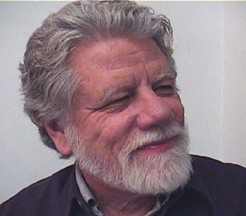
For me, podcasts have replaced talk radio. I was an ardent talk radio listener and I still love it, but podcasts make the experience better. The champion of podcast, for me, is Dr. David van Nuys of Shrinkrapradio. Also the Skeptics' guide to the Universe and The Word Nerds have this great talk radio dynamic, but Dr. Dave is the best. Dr. Dave is also very innovative and he has begun to experiment in podcast with yet another feature of talk radio transported to podcast: phone in. On Sundays, beginning December 9th, at 10 AM Pacific time (check with your time zone) through Skype, phone and the web, listeners can participate in the recording of the podcast, talking and through the chat screen.

Co-host on these occasions will be Jerry Trumbule, friend and colleague of Dr. Dave and the person who allegedly pushed Dave into podcasting and thus fathered, in a way, Shrinkrapradio. I may participate myself, though the timing is a bit problematic for my time zone - exactly the time I have to put my kids to bed.

On December 2nd, there was a test run that can be heard. No listeners called in and only two hooked up to the chat (I was one of them). But that was on a short notice. I had just finished listening to the latest Shrinkrap when Dave announced the test run and I realized it was happening that very moment. I could participate for a minute but then had to turn my attention to my children again.

Francine Shapiro on Wise Counsel

On the Wise Counsel podcast, Francine Shapiro tells how one day she was walking along the waterfront and pondering a problem that was bothering her and noticed that when she made a certain movement with her eyes, the impact of the problem was decreased. This is how she came up with the idea to investigate the effect of eye movement on the brain and eventually developed the EMDR therapy. Eye Movement Desensitization and Reprocessing is a method that allows - so it claims - the brain to decrease the disturbance of tough memories and reprocess them. It is suggested as a therapy for trauma victims and a wide variety of other problems.

An EMDR session, after having established what the pivotal, problematic memory is, involves nothing more than the client concentrating on the memory and the therapist to induce the required eye movement. Shapiro explains that in effect, this therapy actively induces what otherwise would happen during REM sleep. Apparently, the bad memories were not properly processed, arguably because they were to confronting and were avoided during REM, or in any case not properly handled.

Wise Counsel's host Dr. Dave does a great job at interviewing her and also let her react to the controversies around the therapy. Frankly, it seems too good to be true and Dr. Dave is also frank about his skepticism. In the end, he allows himself to be convinced, looking at the amount of research that backs EMDR up. I myself am not qualified to say that. I warmly recommend everybody to listen to the podcast.

Monday, December 3, 2007

Gospel; right turn, left turn - SOF

In Speaking of Faith, Krista Tippett took me to an experience I was not prepared for, yet which made perfect sense with what I know. The political color of Evangelists, in my mind, is of the far right. Is the ideology of narrow-minded traditionalist family values in league with ultra-nationalism and capitalism. No traces of what I recall from the gospel about tolerance, egalitarianism and care for the weak and the outcast. Krista Tippett interviewed Evangelical reverend Jim Wallis who emphasizes all the social issues: the fight against poverty, unequal chances and so on. For him, these issues follow straight from the Scripture.

You can be cynical about this and claim the Scripture can lead you anywhere, but there is also a reply. The highest values are the most abused. Where Jesus tried to teach us solidarity with our weaker neighbors, preachers of the faith have collaborated with the powers in charge. There have always been distortions of religion for evil purposes.

The same can be done with rationality, or secular world views, I think. Wallis also makes a point to remark Christianity has no monopoly on morality, neither has religion in general. Each religion and each philosophy, so I understand him, is a language with which to attain morality. As such it represents the noblest qualities in us and as such they are infinitely open for abuse such that the ideas, symbols, metaphors, traditions and rituals serve to suppress in stead of to support.

Hannibal in the end - Patrick Hunt

After ten lectures, the Stanford podcast about Hannibal (feed) came to an end. Well, it did so a couple of months ago, but only now I have finished listening to the whole series. Patrick Hunt proved to be a very captivating and excited lecturer. He ends, with the defeat of Hannibal and the eventual death. After all his successes Hannibal is bettered by Scipio Africanus and Rome defeats Carthage.

Hannibal lives on though as a great military strategist. Hunt lists the historical leaders who studied Hannibal closely. Scipio did, as a first, Charlemagne, Napoleon and Patton - to name but a few. Hannibal continues to figure in military academies. And Hunt continues his search in the Alps for the exact route Hannibal took.

In the mean time, though I do not know when, Stanford has started syndicating this great series. When I first found it, it could only be downloaded from iTunes U, but by now, one can subscribe to this and other lectures from Stanford. As with many other great academic institutions. iTunes U is rapidly developing into the best source for great quality podcasts.

OVT en 1915

Soldaten in de loopgraaf (waterverf) - Charles FOUQUERAY 1915OVT spreekt over 1915. Het eerste volle jaar van de oorlog. De verliezen zijn al zo enorm opgelopen dat er geen vergelijkingen meer te trekken vallen. Opnieuw wordt de vraag gesteld waarom de partijen niet gewoon stopten. Kennelijk is het niet zo makkelijk om uit een oorlog weg te lopen als je er eenmaal in zit; de antwoorden blijven onduidelijk.

Waaraan sterven de mannen eigenlijk? We denken altijd aan gevechten, maar in deze uitzending wordt er nog een oorzaak genoemd: geslachtsziekten. Toch zal 1915 het jaar blijven van de eerste gasaanvallen, van Gaillipoli en van de Lusitania.

Andere onderwerpen in deze uitzending zijn de kabinetscrisis van 1965, die ook wel de jenevercrisis wordt genoemd. Was er wel jenever in het spel? Of was het sherry, of hadden de ministers genoeg van elkaar? Verder aandacht voor de positie van rechters tijdens de Bezetting - werden rechters geconfronteerd met dezelfde dilemma's als burgemeesters?

Strength in Numbers - Missing Link

The Missing Link podcast is a podcast about the history of science. In the fifth episode Strength in Numbers, host Elizabeth Green Musselman (EGM) ponders the position of scientists in society. The scientist, over the past hundred years has developed in some kind of a apolitical technological objectivist and as such is a mere tool in the political discourse and not an agent. She argues, scientists should and can take a stand. Implicit lies the idea there is no such thing as true objectivity. The seemingly neutral numbers of scientific knowledge can be used one way or the other. A thought provoking podcast.

When listening to the podcast, you have to keep your eyes on the ball (as it were), since EGM uses excerpts from recordings she made during a conference. This was done with simple hardware and render sound quality of a very poor level. She apologizes in advance, but one needs to truly carefully listen in.